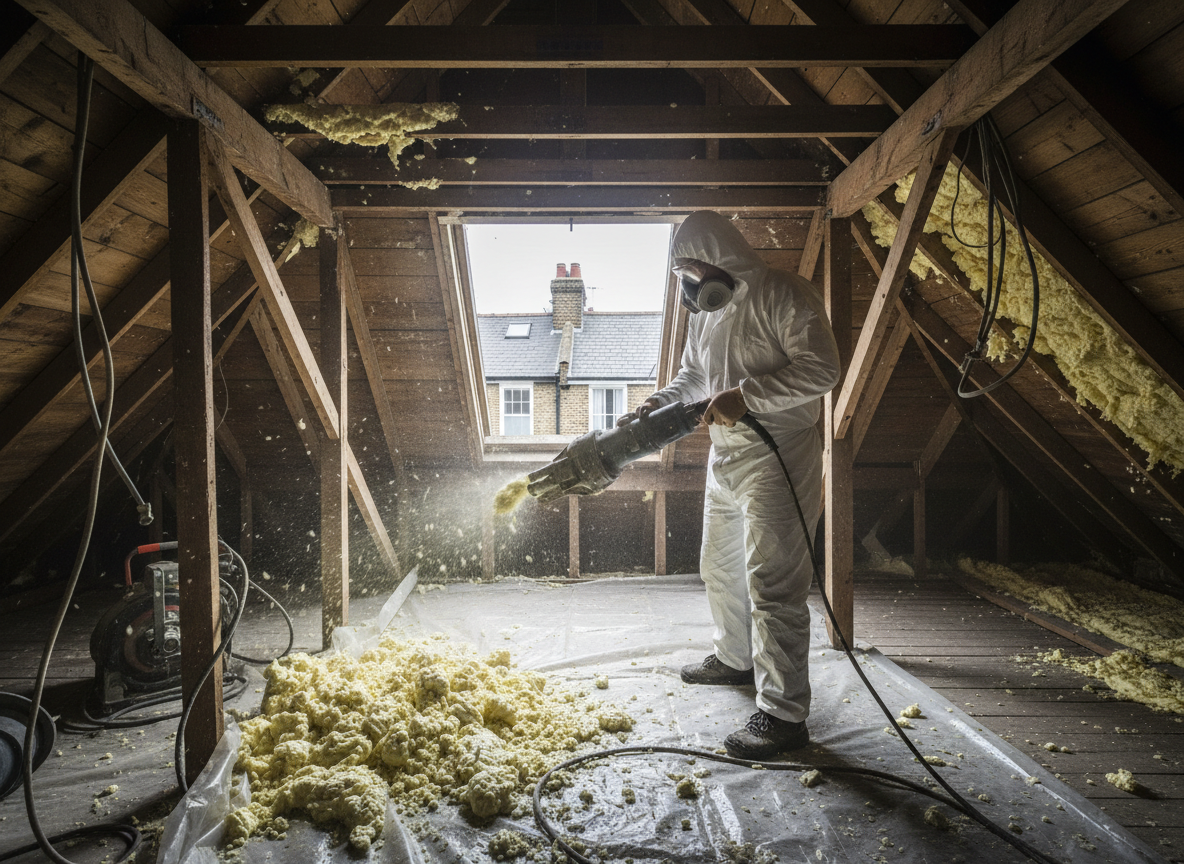
London's older housing stock, particularly Victorian terraces and Edwardian semis in Islington and Camden, often received spray foam in lofts during the 1990s and 2000s to meet energy targets. The city's frequent rainfall and high humidity levels mean many installations now trap moisture against timber joists, leading to rot that only becomes visible once the foam is cut back. Homeowners in these postcodes frequently discover the issue during roof repairs or when selling, as surveyors flag the foam as a defect under current building standards.
Removal work here must account for narrow access hatches common in N7 and nearby terraces, plus the risk of disturbing asbestos-containing materials in ceilings of properties built before 1980. We use negative-pressure containment and HEPA filtration to prevent particles migrating into living spaces below, then dispose of the foam through licensed waste routes required by Greater London regulations. Edge cases include foam applied over electrical cables or in properties with shared party walls where sound transmission changes after removal.
Weather patterns affect scheduling: persistent winter damp makes foam more adhesive and increases drying time for exposed timbers, while summer jobs allow faster progress but require extra dust control because of open windows in adjacent homes. We always inspect for ventilation upgrades needed once the foam is gone, as many London lofts lack the airflow that modern Building Regulations now expect.
Technician insight
In London, the thing that catches most people out with Residential Spray Foam Removal is hidden rot in Victorian roof timbers around Islington and N7, where the city's constant rain has been trapped against joists for years and only shows once the foam is stripped back.
Islington Terrace Loft
Owner called after a surveyor flagged foam during a sale. We found extensive coverage over damp joists in the narrow loft. Foam was removed under containment, rotted sections noted for the builder, and the space left ventilated and clear for reinspection.
How it works
- 1
Initial Assessment
We attend the property to examine loft access, foam depth, timber condition and any hidden services before quoting.
- 2
Site Preparation
Protective sheeting and negative air machines are set up to contain dust and protect the rest of the home.
- 3
Foam Extraction
Foam is cut and removed in sections, with careful checks for underlying rot or cabling damage.
- 4
Clearance and Disposal
All material is bagged and taken to licensed facilities; the space is vacuumed and ventilated.
Pricing
Pricing depends on loft size, foam thickness and access difficulty; we provide upfront quotes after inspection.