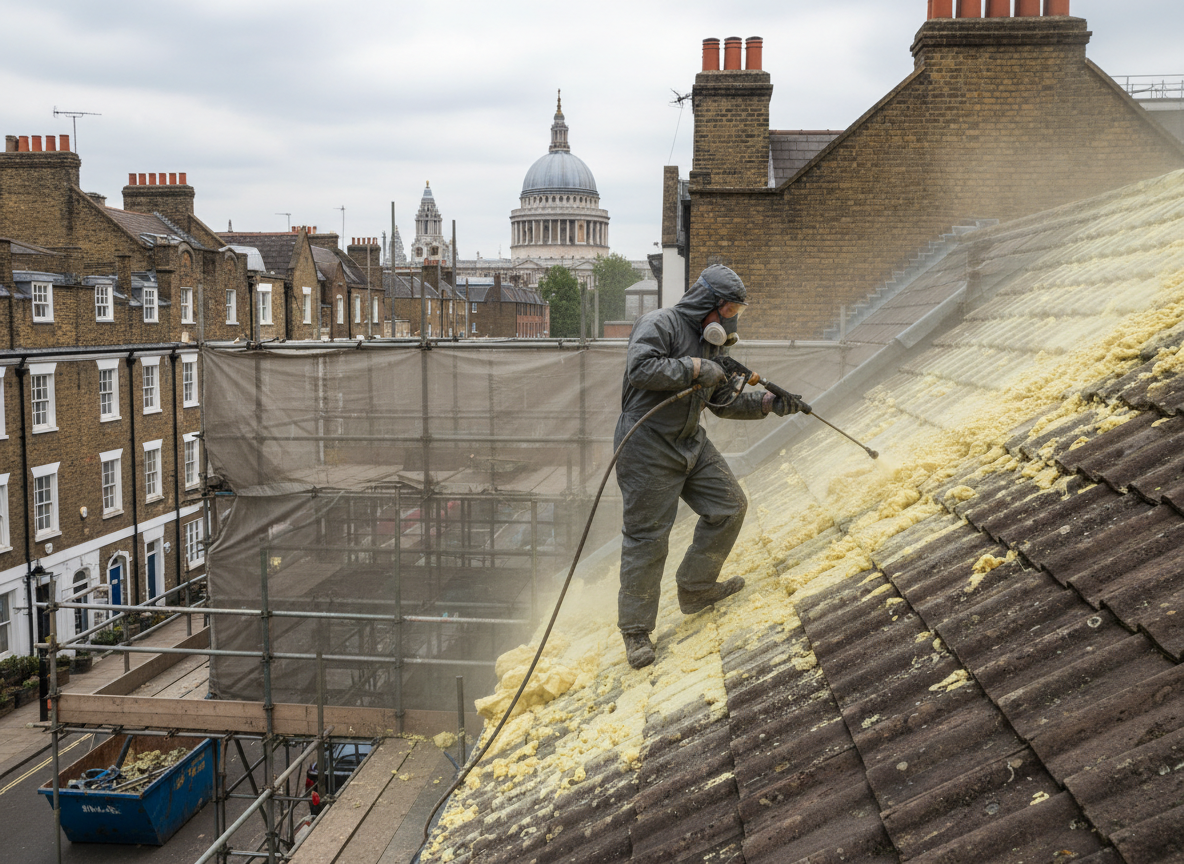
Roof spray foam in London properties often sits under slate or tile coverings on Victorian terraces common in Islington and surrounding boroughs. Removal requires careful separation of the foam from timber joists without damaging original roof structures that predate modern insulation standards. Persistent damp from the region's frequent rainfall can bond foam tightly to underlay, increasing the risk of hidden rot that only appears once the material is stripped.
Greater London homes frequently feature flat roofs on extensions where spray foam was applied decades ago. These installations trap moisture against the decking, leading to blistering and leaks that worsen during autumn storms. Extraction work must account for limited access points in terraced streets, where scaffolding or cherry pickers are often needed to reach the roof safely without obstructing narrow pavements.
Disposal of removed foam follows strict Greater London waste rules, especially when older material contains additives now restricted. Crews bag and label waste on site before transport to licensed facilities, preventing any residue from entering local drainage systems that already handle heavy urban runoff.
Handling Common Edge Cases
Older properties in the N7 postcode and nearby areas can conceal asbestos-containing flashings beneath foam layers. Every job starts with a visual check for suspect materials before cutting begins. Rain during removal can turn dry foam into a slippery slurry that clogs gutters, so tarpaulins and pumps are kept ready.
Technician insight
In London, the thing that catches most people out with roof spray foam removal is how Victorian terraces in areas like Islington trap moisture against the original felt underlay. Once the foam is gone the rot is often already into the joists, and the frequent rain means you cannot leave the roof open overnight without risking interior damage.
Islington Terrace Roof
Homeowner noticed leaks after heavy rain in a Victorian terrace near Hillmarton Road. We found two layers of foam holding water against the decking. Removed the foam, exposed and dried the affected timber, then cleared the site same day.
How it works
- 1
Site Assessment
Inspect roof condition, foam depth, and access routes from the street in London terraces.
- 2
Containment Setup
Protect interior spaces and neighbouring properties from dust and debris during extraction.
- 3
Foam Removal
Cut and lift foam sections, checking for timber damage or moisture issues as work progresses.
- 4
Waste Removal and Cleanup
Bag and remove all material, then clear the roof surface ready for new covering.
Pricing
Cost depends on roof size, number of layers, and access difficulty in terraced streets.