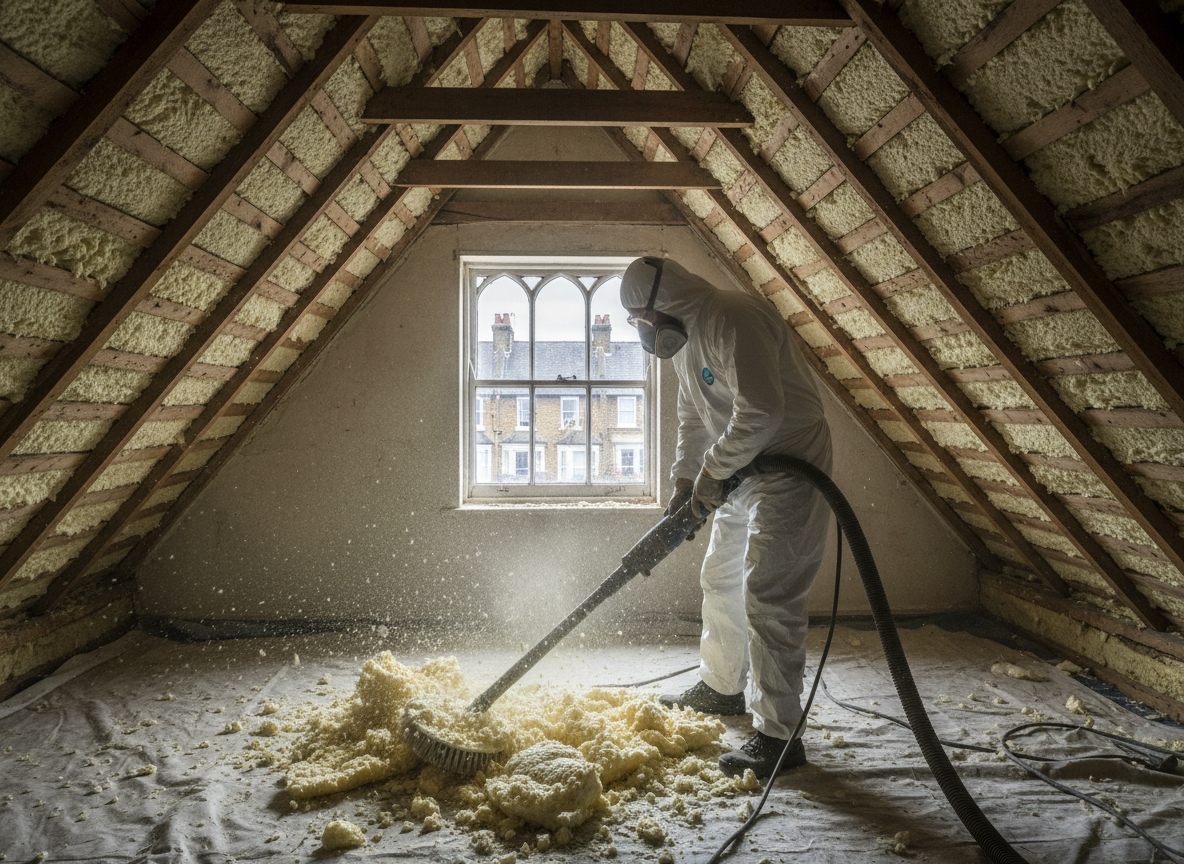
London's older housing stock, particularly Victorian terraces common around the N7 postcode and Islington, often features pitched roofs with limited access and original timber that reacts poorly to closed-cell foam. Once installed, the foam can trap moisture from the city's frequent damp weather, leading to hidden rot in joists and ceilings if not fully removed. Extraction requires cutting back in sections while protecting electrical runs and insulation layers that many properties still retain from earlier retrofits.
Edge cases in Greater London include homes near the Regent's Canal or low-lying areas where groundwater seepage increases loft humidity. Foam bonded directly to lath and plaster ceilings demands slower, hand-tool work to avoid cracking fragile surfaces. Crews must also account for party-wall construction shared with neighbours, where over-cutting risks structural complaints or disputes under local building practices.
Regulation notes for London lofts focus on ventilation requirements after removal. Leaving foam residue can violate breathability standards in older buildings, and incomplete jobs often result in recurring mould during winter. Homeowners should inspect for any remaining adhesive on rafters, as London clay soil movement can widen small gaps over time and allow further damp ingress.
Technician insight
In London, the thing that catches most people out with loft spray foam removal is how Victorian terraces around N7 trap moisture against the foam, especially on north-facing roofs where the clay soil and frequent rain keep humidity high year-round.
N7 Terrace Loft Extraction
A homeowner in an Islington Victorian house reported musty smells in the bedroom below the loft. Inspection showed closed-cell foam bonded to rafters had trapped condensation from London winters. We removed the foam in sections, cleared residue, and improved cross-ventilation. The loft dried out and the musty odour disappeared.
How it works
- 1
Site Assessment
Inspect loft access, foam depth, and any timber damage in the specific London property.
- 2
Containment Setup
Protect living areas below and seal party walls before starting extraction.
- 3
Foam Removal
Cut and peel foam in controlled sections, clearing residue from rafters and joists.
- 4
Ventilation Check
Verify airflow paths and advise on any needed improvements for the London climate.
Pricing
Pricing varies by loft size, foam thickness, and access constraints typical in London terraces.