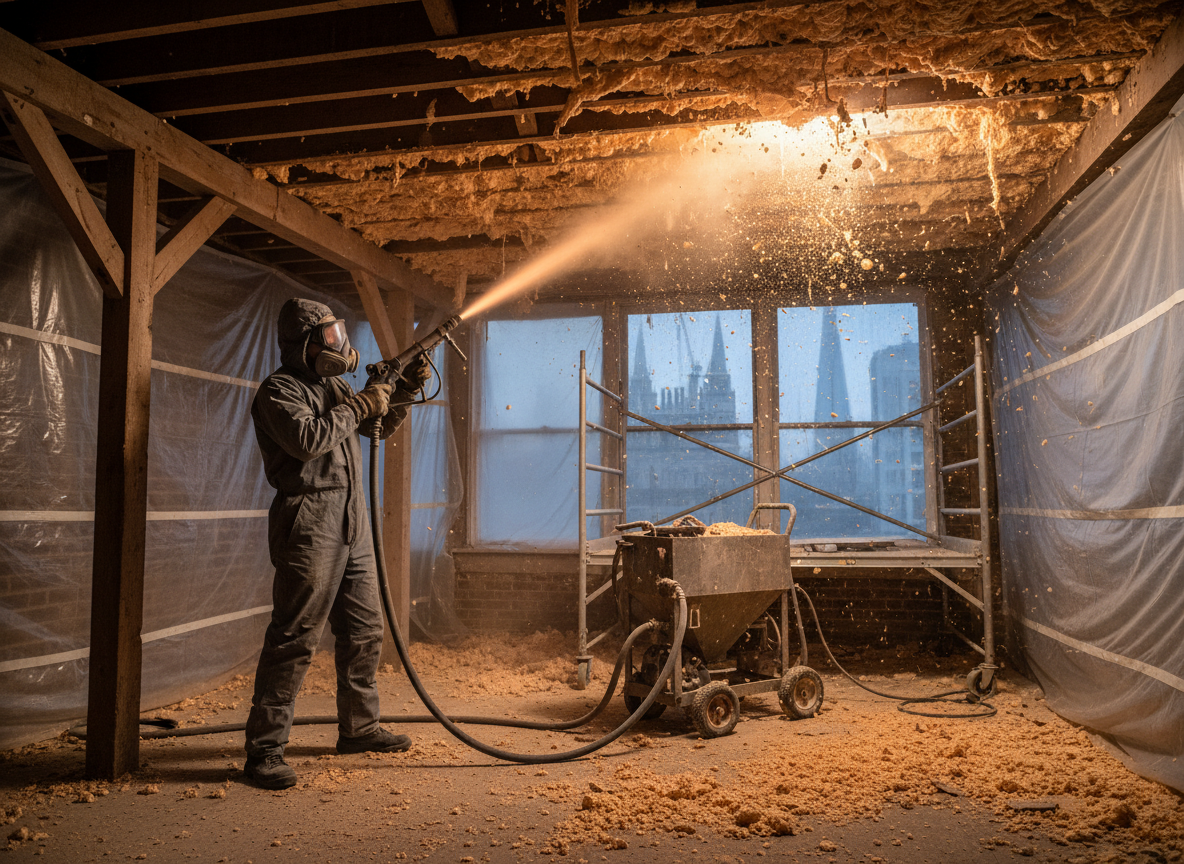
Sand blasting spray foam insulation removal is the preferred method in London when foam has been applied directly to lath and plaster or older brickwork common in Islington and Camden terraces. The controlled abrasive stream strips cured polyurethane without gouging timber joists or fracturing fragile ceilings that often hide behind layers of paint and paper. Operators must constantly adjust pressure and media type because London stock varies sharply between pre-1900 lime-plastered ceilings and 1960s concrete soffits in estates around Finsbury Park.
Moisture trapped beneath foam is a frequent issue after roof leaks in the capital’s variable rainfall. Blasting exposes saturated timbers quickly so they can be dried before new insulation is considered. Dust containment is critical; properties in tight terraces like those near Hillmarton Road require full negative-air setups to stop particles migrating into neighbouring homes through shared chimney breasts and party walls.
Electrical and plumbing runs are often buried inside the foam on older conversions. Careful pre-scanning with moisture meters and endoscopes prevents live cables being hit during blasting. After removal, the substrate is vacuumed and inspected for remaining residue that could affect new insulation adhesion or ventilation performance required under current building standards.
Technician insight
In London, the thing that catches most people out with sand blasting spray foam insulation removal is how many 1890s terraces around N7 and N5 still have original lath and plaster hidden behind the foam; one wrong pressure setting and the ceiling comes down with it.
Foam removal in a converted Islington flat
Homeowner reported damp patches after a roof leak in a 1920s conversion. We found thick closed-cell foam covering saturated joists and live cables. Sand blasting cleared the foam cleanly, exposed the wet timber for drying, and left the original ceiling intact.
How it works
- 1
Site Assessment
Inspect loft or wall cavities, identify substrate type, locate services, and confirm sand-blasting is suitable for the property age and construction.
- 2
Containment Setup
Seal rooms, install negative air filtration, and protect floors and fixtures before introducing blast media.
- 3
Controlled Blasting
Remove foam layer by layer using calibrated pressure and media suited to plaster, brick or timber without surface damage.
- 4
Clearance and Inspection
Vacuum residue, check for hidden moisture or wiring issues, and confirm substrate is clean and ready for follow-on work.
Pricing
Cost depends on access difficulty, depth of foam, and whether additional drying or substrate repairs are needed after blasting.