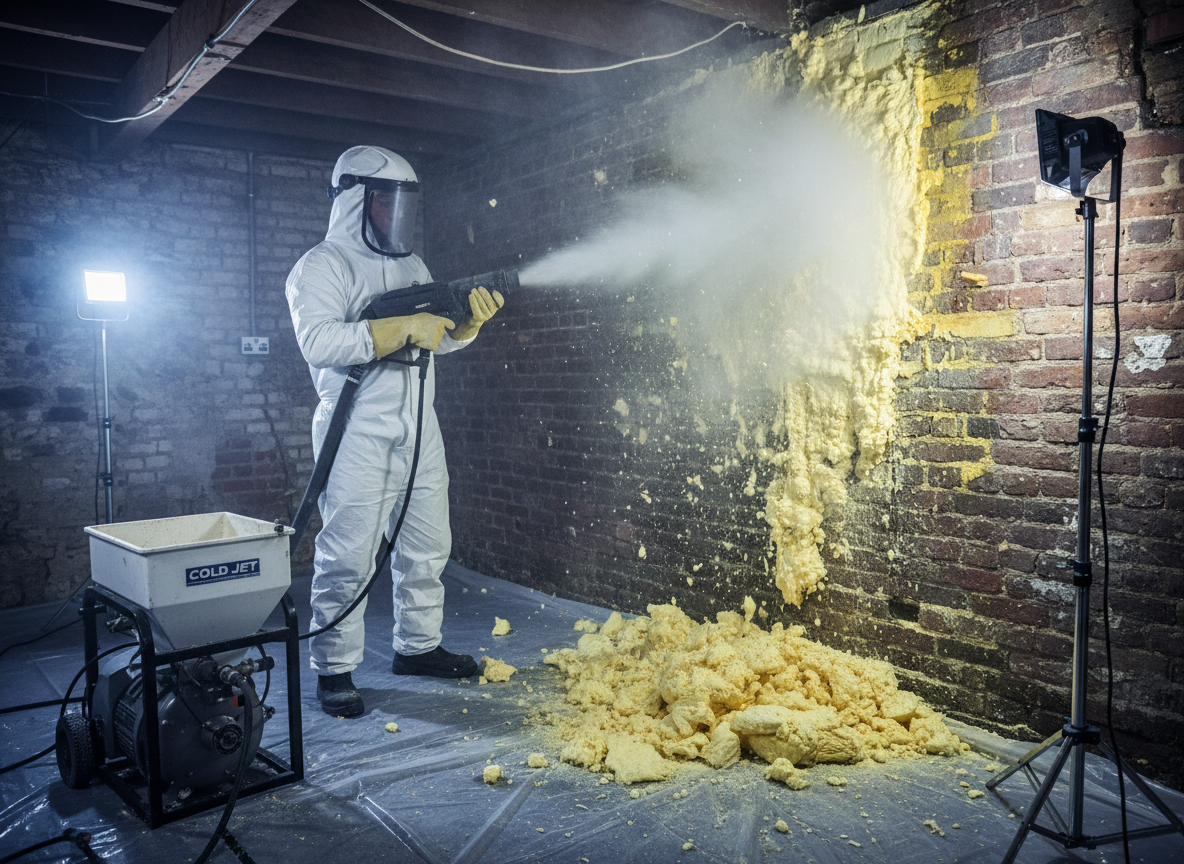
Dry ice blasting removes spray foam by propelling solid CO2 pellets that sublimate on contact, lifting the material from joists and rafters without abrasion or water. In London terraces built before 1919 the foam often bonds to lime plaster and exposed lath, so operators must reduce blast pressure and work in short passes to avoid cracking fragile ceilings below. Greater London’s frequent driving rain and high winter humidity also mean crews check for hidden moisture behind the foam before starting; trapped damp can turn a straightforward loft job into a multi-day drying and repair sequence.
Older stock around Islington, Camden and Hackney commonly contains lead paint on rafters and occasional asbestos residues in early insulation layers. Dry ice blasting produces no secondary waste stream, which keeps the site cleaner when working in confined roof voids with limited access via loft hatches only. Post-removal inspection always includes checking for rot in ceiling joists caused by the original foam trapping condensation against chimney breasts that run through many North London properties.
Local Building Regulations and party-wall considerations in terraced streets require dust and debris containment so neighbouring homes are not affected. After blasting, ventilation is restored by clearing blocked eaves and fitting new soffit vents where previous installations had been sealed over. Homeowners in the N7 and surrounding postcodes often call after noticing black mould patches on bedroom ceilings directly below treated lofts.
Technician insight
In London, the thing that catches most people out with dry ice blasting spray foam removal is how Victorian terraces in Islington and Camden trap moisture against the brickwork behind the foam, turning a standard blast into a longer job once the hidden damp is exposed.
Islington Terrace Loft
Homeowner in Islington reported musty smells from a treated loft. Inspection showed spray foam bonded to damp lath and plaster over a chimney breast. Dry ice blasting lifted the material without cracking historic ceilings. Ventilation was restored and mould risk eliminated.
How it works
- 1
Site Assessment
Inspect loft or wall cavities, check for damp, lead paint and asbestos indicators, and confirm access routes through typical London terrace hatches.
- 2
Containment Setup
Seal adjacent rooms and party walls with plastic sheeting and negative-air units to prevent dust migration into neighbouring properties.
- 3
Dry Ice Blasting
Apply CO2 pellets at calibrated pressure to lift foam from timber and brick while monitoring for hidden moisture or fragile plaster.
- 4
Clearance and Ventilation
Remove residue, restore eaves airflow, and advise on follow-up inspections for rot or insulation replacement.
Pricing
Cost depends on loft size, access difficulty in Victorian terraces, and any additional drying or containment required.